














































Related Content
First Post

What Is a Strategic IT Partner?

The Benefits of an Audit-First Approach

The Benefits of an Audit-First Approach

What Are Managed IT Services, Really?

What Are Managed IT Services, Really?

Related Content
What Is a Strategic IT Partner?

What Is a Strategic IT Partner?

The Benefits of an Audit-First Approach

The Benefits of an Audit-First Approach

What Are Managed IT Services, Really?

What Are Managed IT Services, Really?

Related Content
Considering IT Outsourcing? Here's What You Need to Know

Considering IT Outsourcing? Here's What You Need to Know

What Are Managed IT Services, Really?

What Are Managed IT Services, Really?

The Benefits of an Audit-First Approach

The Benefits of an Audit-First Approach

Related Content
What Are Managed IT Services, Really?

What Are Managed IT Services, Really?

Considering IT Outsourcing? Here's What You Need to Know

Considering IT Outsourcing? Here's What You Need to Know

What Is a Strategic IT Partner?

What Is a Strategic IT Partner?

Related Content
What Is a Strategic IT Partner?

What Is a Strategic IT Partner?

Considering IT Outsourcing? Here's What You Need to Know

Considering IT Outsourcing? Here's What You Need to Know

Cyber Security 101 for Businesses

Cyber Security 101 for Businesses

Related Content
AI 101: What It Is, How to Use It, What to Watch Out For

AI 101: What It Is, How to Use It, What to Watch Out For

Cyber Security 101 for Businesses

Cyber Security 101 for Businesses

The Benefits of an Audit-First Approach

The Benefits of an Audit-First Approach

Related Content
What Is a Strategic IT Partner?

What Is a Strategic IT Partner?

What Are Managed IT Services, Really?

What Are Managed IT Services, Really?

The Benefits of an Audit-First Approach

The Benefits of an Audit-First Approach

Related Content
Don’t Cut Corners on HIPAA Compliance

Don’t Cut Corners on HIPAA Compliance

The Benefits of an Audit-First Approach

The Benefits of an Audit-First Approach

What Is a Strategic IT Partner?

What Is a Strategic IT Partner?

Related Content
Considering IT Outsourcing? Here's What You Need to Know

Considering IT Outsourcing? Here's What You Need to Know

What Are Managed IT Services, Really?

What Are Managed IT Services, Really?

Cyber Security 101 for Businesses

Cyber Security 101 for Businesses

Related Content
Why Dropbox Wins Compared to Other Solutions

Why Dropbox Wins Compared to Other Solutions

The Benefits of an Audit-First Approach

The Benefits of an Audit-First Approach

Related Content
Cyber Security 101 for Businesses

Cyber Security 101 for Businesses

The Benefits of an Audit-First Approach

The Benefits of an Audit-First Approach

Related Content
Why You Need to Upgrade Windows ASAP

Why You Need to Upgrade Windows ASAP

The Benefits of an Audit-First Approach

The Benefits of an Audit-First Approach

Related Content
What Is a Strategic IT Partner?

What Is a Strategic IT Partner?

The Benefits of an Audit-First Approach

The Benefits of an Audit-First Approach

What Are Managed IT Services, Really?

What Are Managed IT Services, Really?

Related Content
What Is a Strategic IT Partner?

What Is a Strategic IT Partner?

The Benefits of an Audit-First Approach

The Benefits of an Audit-First Approach

What Are Managed IT Services, Really?

What Are Managed IT Services, Really?

Related Content
What Is a Strategic IT Partner?

What Is a Strategic IT Partner?

The Benefits of an Audit-First Approach

The Benefits of an Audit-First Approach

What Are Managed IT Services, Really?

What Are Managed IT Services, Really?

Related Content
What Is a Strategic IT Partner?

What Is a Strategic IT Partner?

The Benefits of an Audit-First Approach

The Benefits of an Audit-First Approach

What Are Managed IT Services, Really?

What Are Managed IT Services, Really?

Related Content
What Is a Strategic IT Partner?

What Is a Strategic IT Partner?

The Benefits of an Audit-First Approach

The Benefits of an Audit-First Approach

What Are Managed IT Services, Really?

What Are Managed IT Services, Really?

Related Content
What Is a Strategic IT Partner?

What Is a Strategic IT Partner?

The Benefits of an Audit-First Approach

The Benefits of an Audit-First Approach

What Are Managed IT Services, Really?

What Are Managed IT Services, Really?

Related Content
What Is a Strategic IT Partner?

What Is a Strategic IT Partner?

The Benefits of an Audit-First Approach

The Benefits of an Audit-First Approach

What Are Managed IT Services, Really?

What Are Managed IT Services, Really?

Related Content
What Is a Strategic IT Partner?

What Is a Strategic IT Partner?

The Benefits of an Audit-First Approach

The Benefits of an Audit-First Approach

What Are Managed IT Services, Really?

What Are Managed IT Services, Really?

Related Content
What Is a Strategic IT Partner?

What Is a Strategic IT Partner?

The Benefits of an Audit-First Approach

The Benefits of an Audit-First Approach

What Are Managed IT Services, Really?

What Are Managed IT Services, Really?

Related Content
What Is a Strategic IT Partner?

What Is a Strategic IT Partner?

The Benefits of an Audit-First Approach

The Benefits of an Audit-First Approach

What Are Managed IT Services, Really?

What Are Managed IT Services, Really?

Related Content
What Is a Strategic IT Partner?

What Is a Strategic IT Partner?

The Benefits of an Audit-First Approach

The Benefits of an Audit-First Approach

What Are Managed IT Services, Really?

What Are Managed IT Services, Really?

Related Content
What Is a Strategic IT Partner?

What Is a Strategic IT Partner?

The Benefits of an Audit-First Approach

The Benefits of an Audit-First Approach

What Are Managed IT Services, Really?

What Are Managed IT Services, Really?

Resources

Assessments
Whitepapers
Related Content
What Is a Strategic IT Partner?

What Is a Strategic IT Partner?

AI 101: What It Is, How to Use It, What to Watch Out For

AI 101: What It Is, How to Use It, What to Watch Out For

What Are Managed IT Services, Really?

What Are Managed IT Services, Really?

Related Content
What Is a Strategic IT Partner?

What Is a Strategic IT Partner?

The Benefits of an Audit-First Approach

The Benefits of an Audit-First Approach

Related Content
Protecting Your Organization From Cyber Attacks Whitepaper

Protecting Your Organization From Cyber Attacks Whitepaper

Dynamic Computing helps achieve and maintain compliance with HIPAA, PCI, CMMC, HITECH & NIST regulations.

Compliance Support

Ensure your organization complies with all the necessary laws and regulations governing IT.

COMPLIANCE

Compliance Support Basics

Organizations today are entrusted with a growing volume of sensitive information, including customer records, employee data, financial information, healthcare records, intellectual property, and other critical business assets. Regulatory compliance provides a framework for helping organizations manage these responsibilities while reducing risk and supporting responsible business practices.

Compliance requirements vary across industries and jurisdictions. Healthcare organizations may be subject to HIPAA requirements, businesses that process payment cards often need to comply with PCI DSS standards, and many organizations must address privacy regulations that govern the collection, storage, and use of personal information. Depending on the nature of the business, multiple regulatory frameworks may apply simultaneously, each carrying its own expectations and obligations.

Maintaining compliance helps organizations reduce risk, strengthen customer confidence, support contractual requirements, and demonstrate a commitment to protecting sensitive information. While compliance requirements can be complex, they ultimately serve the broader purpose of helping organizations establish consistent security, privacy, and governance practices.

At Dynamic Computing, we help organizations approach compliance through practical, business-focused strategies that align regulatory requirements with operational objectives. Our goal is to help businesses create sustainable compliance programs that support both security and long-term success.

Dynamic helps achieve HIPAA compliance.

HIPAA Compliance

The Health Insurance Portability and Accountability Act (HIPAA) governs the privacy, security, and integrity of patient health information. It requires organizations to have strict safeguards in place and ensures that, should a breach happen, patients are informed and steps taken to minimize the damage.

Any business that works or even touches the healthcare industry must be aware of and ensure HIPAA compliance. That means adopting a proactive approach with risk assessments, safeguards, security policies, employee training, and more.

Dynamic Computing helps achieve HITECH Compliance.

HITECH Compliance

HITECH Compliance refers to adhering to the rules and regulations set forth by the Health Information Technology for Economic and Clinical Health (HITECH) Act, which was enacted in 2009 to promote the adoption and meaningful use of health information technology (particularly electronic health records, or EHRs).

HITECH is closely tied to HIPAA (the Health Insurance Portability and Accountability Act) and strengthens its privacy and security protections.
 

Dynamic helps you achieve PCI DSS compliance to protect your payment environments.

PCI DSS Compliance

The Payment Card Industry Data Security Standard (PCI DSS) is designed to protect payment information from fraud and data breaches. It was developed by the likes of VISA, MasterCard, and American Express in order to standardize and strengthen payment security.

PCI DSS sets a clear framework for securing payment environments, from encrypting transactions to ensuring firewalls and access controls are in place. By following these security best practices, businesses not only protect their customers but also reduce their own liability in the event of an attack.

Working with Dynamic Computing helps your business maintain CMMC compliance.

CMMC Compliance

If your business works with the Department of Defense (DoD) or handles sensitive government data, you need to be in compliance with the Cybersecurity Maturity Model Certification (CMMC) framework. It ensures that contractors and subcontractors across the supply chain meet strict cybersecurity standards. 

The defense supply chain is a prime target for hackers, and even a small vulnerability can lead to massive breaches. That’s why a company that fails to meet CMMC requirements risks losing government contracts.
Working with Dynamic Computing helps your business achieve and maintain NIST compliance.

NIST Compliance

Pacific Northwest companies like Boeing, Microsoft, and Amazon regularly do business with the government.

Because of those partnerships, any company acting as a vendor for them — whether it’s along the supply chain or by providing software solutions — must maintain NIST compliance. By ensuring compliance, businesses reduce their risk of data breaches, avoid legal penalties, and maintain eligibility for lucrative contracts. Without adherence to NIST frameworks, they may face disqualification from supply chains, reputational damage, and potential security risks that could jeopardize national security.

Beyond regulatory requirements, implementing NIST guidelines helps organizations strengthen their security architecture, enhance threat detection, and improve incident response capabilities.
A Deeper Look at Compliance Support

Achieving and maintaining compliance requires more than understanding which regulations apply to an organization. Businesses must also establish the policies, processes, technical controls, and governance practices necessary to demonstrate ongoing adherence to applicable requirements. Compliance is an ongoing effort that evolves alongside changing regulations, business operations, and technology environments.

Many compliance initiatives begin with evaluating existing practices and identifying areas that may require improvement. Organizations often conduct risk assessments, security reviews, gap analyses, and policy evaluations to better understand their current compliance posture. These activities help establish priorities and create a roadmap for addressing potential deficiencies before they become larger operational or regulatory concerns.

A comprehensive compliance program typically incorporates a combination of administrative, technical, and operational safeguards. Common examples include access management policies, multi-factor authentication, encryption standards, endpoint protection, logging and monitoring capabilities, vendor oversight procedures, employee training programs, data retention policies, and incident response planning. Together, these controls help organizations protect sensitive information while supporting regulatory requirements.

Documentation and audit readiness also play important roles in compliance management. Many regulatory frameworks require organizations to maintain records that demonstrate how policies are implemented, how risks are managed, and how security controls are maintained over time. Accurate documentation helps support internal reviews, external audits, customer inquiries, and regulatory reporting obligations.

Beyond meeting formal requirements, strong compliance programs often contribute to broader business benefits. Organizations that maintain effective governance and security practices are frequently better positioned to reduce operational risk, strengthen cyber security resilience, improve stakeholder confidence, and respond more effectively to changing regulatory expectations.

At Dynamic Computing, we help businesses navigate compliance requirements through risk assessments, security planning, policy development, technical implementation, and ongoing support. Our approach focuses on building practical compliance programs that help organizations protect sensitive information, maintain regulatory readiness, and support long-term operational stability.

Don't cut corners on HIPAA compliance.

Featured Article

Don't Cut Corners on HIPAA Compliance

The Health Insurance Portability and Accountability Act (HIPAA) is a critical U.S. law that governs the privacy, security, and integrity of patient health information.

Enacted in 1996, compliance with the law is mandatory for healthcare providers, health plans, and businesses handling protected health information.

Among those businesses are managed IT services providers or any organization that touches a company’s IT.

Read More   cta_arrow_circle

Learn More About Our Compliance Support Services

Depending on your industry, we can help you stay compliant with any of these common regulations.
Learn more about how Dynamic Computing helps you maintain HIPAA compliance.
HIPAA
Stay in line with strict federal regulations around healthcare.
Learn more about how Dynamic Computing helps you maintain PCI DSS compliance.
PCI DSS
Keep on the right side of critical credit card transaction regulations.
Learn more about how Dynamic Computing helps your business maintain HITECH compliance.
HITECH
Follow Health Information Technology for Economic and Clinical Health rules.
Learn more about how Dynamic Computing helps your business maintain CMMC compliance.
CMMC
Follow the right regulations when working with the federal government.
Learn more about how Dynamic Computing helps your business maintain NIST compliance.
NIST
Improve your organization’s security and resilience following best practices.

Why Small and Mid-Sized Businesses Choose Dynamic Computing

We do IT differently. We are local to Puget Sound, which means we are able to get to know the ins and outs of your business and what you're trying to achieve. We also provide real support from dedicated engineers and specialists so you know someone will always be available to help with your IT whenever and wherever your need it.


Dynamic Computing offers predictable pricing.
Predictable Pricing
Budget confidently with a fixed-fee subscription model that provides cost certainty.
Dynamic Computing offers real support through dedicated primary technicians.
Real Support
Dedicated primary technician who knows your employees and processes inside and out.
Dynamic Computing leverages their deep expertise as compliance specialists.
Compliance Specialists
Leverage deep expertise in all complex compliance standards.
Dynamic Computing provides an expert local team.
Local Team
Connect with a 100% local team based in your backyard in the Pacific Northwest.
Dynamic Computing provides in-depth foundational analysis to identify priorities.
In-Depth Analysis
Get it right from the start via a foundational assessment that identifies and prioritizes needs.
Dynamic Computing provides real people who know your business, providing a real human touch to their services.
Human Touch
Interact with real people who know you and your business, not just a ticketing system.

THE ESSENTIALS OF STRONG IT

Why Seattle’s Best Companies Choose Us

For 25+ years, we’ve worked with many of the top small and mid-sized businesses across the Pacific Northwest. Our clients range in size from 20 to over 200 IT users and many have complex cyber security and/or compliance requirements.

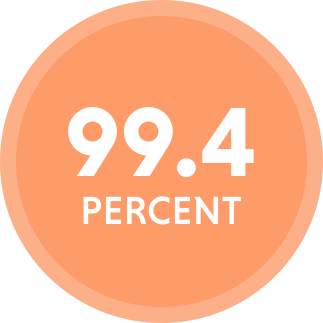
Dynamic Computing has a rate of 99.4 percent in customer satisfaction.

Customer Satisfaction Rating

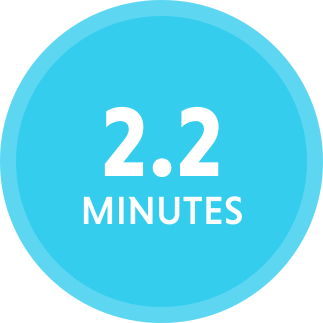
Dynamic Computing has an average response time to IT support and services calls and support tickets of 2.2 minutes.

Average Response Time

Dynamic Computing's Managed Service Provider have on average worked with Dynamic computing for over 12 years.

Average Client Partnership

5_stars

Check Out Our Many 5-Star Google Reviews 

View the Milbrandt Case Study on how hiring Dynamic Computing as their managed service provider allowed them to scale up their IT seamlessly
Case Study

"We’ve tripled in size in the past five years, and Kevin and his team worked right alongside us. Dynamic Computing scaled their services to our growth, making sure we had exactly what we needed to work seamlessly at as a team. They set us up for success."


Rick Tolleshaug - Milbrandt Architects - Senior Principal Architect

View the Ellis, Li, & McKinstry Case Study on how Dynamic Computing’s managed IT services ensure security, compliance, and seamless collaboration.
Case Study

“Dynamic Computing understands what we need to do as a law firm. They’re keenly aware of our industry regulations and licensure requirements, and they keep our office on the cutting edge of security. They operate as part of our team to ensure confidentiality and excellence at every turn.”

Lana Floyd - Ellis, Li & McKinstry PLLC - Managing Partner

View the KSARC Case Study on hiring Dynamic Computing as a managed service provider provided a secure telehealth system to ensure HIPAA compliance and uninterrupted client care.
Case Study

“They knew that we would need more than a standard Zoom subscription to serve our clients and comply with HIPAA regulations. They transitioned us overnight to a secure telehealth system so we could continue to serve our clients.”


Ashleigh Vessey - King County Sexual Assault Resource Center - Administrator and Special Projects Manager

View the Pacific West Construction Case Study on how hiring Dynamic Computing as a managed service provider delivered customized IT solutions that addressed unique business challenges and strengthen team collaboration.
Case Study

“Dynamic understands our specific IT needs. They create custom solutions to our business’ unique challenges, and we truly feel like their team is an extension of ours.”


Zack Hill - Pacific West Construction and Maintenance - CEO

View the Blanton Turner Case Study on how hiring Dynamic Computing as a managed service provider resulted in a strategic IT system tailored to their needs and long-term goals.
Case Study

“Our whole process of building our system with Dynamic was strategic, and we got the system that we wanted.”


Chasten Fulbright - Blanton Turner - Principal & Creative Innovator

View the Umoja Biopharma case study to see how hiring Dynamic Computing as a managed service provider helped Umoja scale its IT systems, processes, and security.
Case Study

“I have recommended Dynamic Computing to colleagues in the industry, and what I've shared about them is their great support. Dynamic has mature processes and systems – from ticketing to procurement to how they budget and track things for Umoja.”

Jennifer Lester - Umoja Biopharma - Senior Vice President of IT and Informatics

What's Included in Compliance Services?

Our compliance services are designed to help small and mid-sized businesses in various industries achieve and maintain compliance with their specific regulations. We provide you with:

  • Risk assessments of potential security vulnerabilities and areas where compliance is lacking

  • Policy development and implementation to keep your business compliant

  • Continuous monitoring of your IT infrastructure to alert you of possible compliance failures

  • Employee compliance training

  • Compliance audit support, including reports, evidence, and expert guidance to streamline the audit process
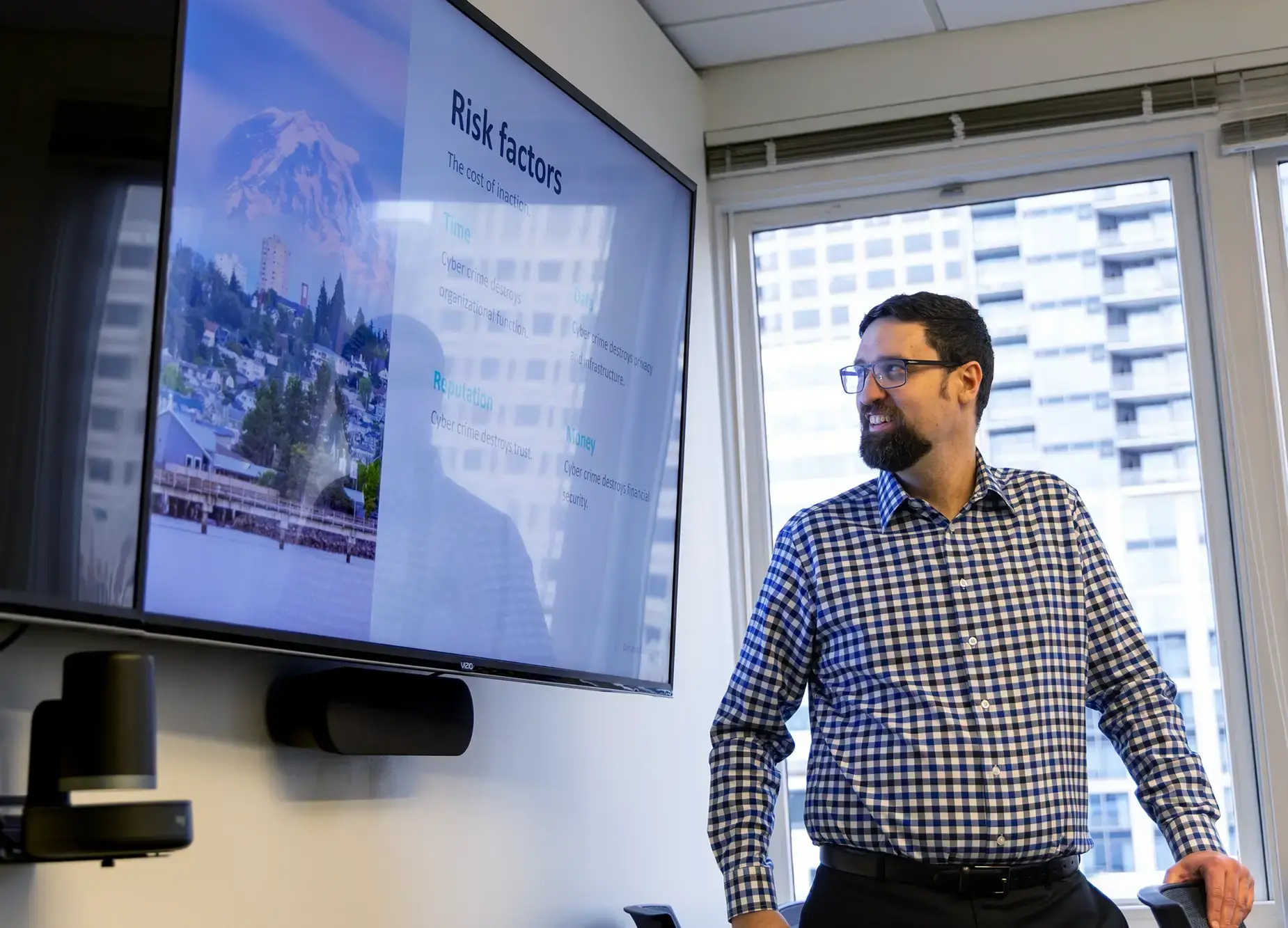

Learn more about Dynamic Computing's compliance support for HIPAA, PCI, CMMC, HITECH, and NIST regulations.

How to Get Started

Every one of our engagements begins with a complete audit of your current IT.

Have an initial call with Dynamic Computing to see where your IT is meeting your needs and where it falls short.

Initial Call

Meet with our team and tell us where your IT is meeting your expectations and where it's falling short.

Dynamic Computing provides a system survey to dive into every element of your current IT.

System Survey

A deep dive into every element of your current IT, from the hardware you own to your security posture.

Dynamic Computing provides a comprehensive report of your IT needs.

Diagnostic

A detailed report on your current IT, where it needs to be improved, and a roadmap making those improvements happen.
More About Compliance

Dynamic Computing helps make sense of PCI DSS Compliance.

Making Sense of PCI Compliance

The Payment Card Industry Data Security Standard (PCI DSS) is designed to protect payment information from fraud and data breaches.


Read More

NIST Compliance is made easy with Dynamic Computing.

The Ins & Outs of NIST Compliance

Most cyber security frameworks can be traced back to the acronym NIST, which is short for the National Institute of Standards and Technology. This government agency...
Read More

Reach out to Dynamic Computing to ensure you're HIPAA compliant.

Don't Cut Corners on HIPAA Compliance

The Health Insurance Portability and Accountability Act (HIPAA) is a critical U.S. law that governs the privacy, security, and integrity of patient health information.

Read More

Get IT Right This Time

You deserve focused, expert-managed IT services that meet your complex needs.
Schedule time with our IT solutions team and learn how hiring Dynamic Computing as your managed service provider can help you grow your business.

FAQs

What is compliance?
Compliance refers to the process of meeting industry regulations, legal requirements, and security standards designed to protect sensitive information and ensure responsible business operations.
Why is compliance important for businesses?
Compliance helps organizations reduce risk, protect customer data, maintain trust, and avoid potential penalties or legal issues. Strong compliance practices also support operational stability and cyber security readiness.
What types of compliance standards exist?
Compliance requirements vary by industry and may include standards related to data privacy, cyber security, financial reporting, healthcare information, or operational security. Common examples include HIPAA, PCI DSS, SOC 2, GDPR, and ISO standards.
How can businesses improve compliance?
Businesses can improve compliance by implementing clear policies, maintaining secure IT systems, training employees, conducting regular risk assessments, and monitoring systems for potential vulnerabilities or threats.
Is compliance a one-time process?
No. Compliance is an ongoing effort that requires regular reviews, updates, employee awareness, and continuous monitoring to keep up with evolving regulations, technologies, and security risks.