




























































Related Content
First Post

What Is a Strategic IT Partner?

The Benefits of an Audit-First Approach

The Benefits of an Audit-First Approach

What Are Managed IT Services, Really?

What Are Managed IT Services, Really?

Related Content
What Is a Strategic IT Partner?

What Is a Strategic IT Partner?

The Benefits of an Audit-First Approach

The Benefits of an Audit-First Approach

What Are Managed IT Services, Really?

What Are Managed IT Services, Really?

Related Content
Considering IT Outsourcing? Here's What You Need to Know

Considering IT Outsourcing? Here's What You Need to Know

What Are Managed IT Services, Really?

What Are Managed IT Services, Really?

The Benefits of an Audit-First Approach

The Benefits of an Audit-First Approach

Related Content
What Are Managed IT Services, Really?

What Are Managed IT Services, Really?

Considering IT Outsourcing? Here's What You Need to Know

Considering IT Outsourcing? Here's What You Need to Know

What Is a Strategic IT Partner?

What Is a Strategic IT Partner?

Related Content
What Is a Strategic IT Partner?

What Is a Strategic IT Partner?

Considering IT Outsourcing? Here's What You Need to Know

Considering IT Outsourcing? Here's What You Need to Know

Cyber Security 101 for Businesses

Cyber Security 101 for Businesses

Related Content
AI 101: What It Is, How to Use It, What to Watch Out For

AI 101: What It Is, How to Use It, What to Watch Out For

Cyber Security 101 for Businesses

Cyber Security 101 for Businesses

The Benefits of an Audit-First Approach

The Benefits of an Audit-First Approach

Related Content
What Is a Strategic IT Partner?

What Is a Strategic IT Partner?

What Are Managed IT Services, Really?

What Are Managed IT Services, Really?

The Benefits of an Audit-First Approach

The Benefits of an Audit-First Approach

Related Content
Don’t Cut Corners on HIPAA Compliance

Don’t Cut Corners on HIPAA Compliance

The Benefits of an Audit-First Approach

The Benefits of an Audit-First Approach

What Is a Strategic IT Partner?

What Is a Strategic IT Partner?

Related Content
Considering IT Outsourcing? Here's What You Need to Know

Considering IT Outsourcing? Here's What You Need to Know

What Are Managed IT Services, Really?

What Are Managed IT Services, Really?

Cyber Security 101 for Businesses

Cyber Security 101 for Businesses

Related Content
Why Dropbox Wins Compared to Other Solutions

Why Dropbox Wins Compared to Other Solutions

The Benefits of an Audit-First Approach

The Benefits of an Audit-First Approach

Related Content
Cyber Security 101 for Businesses

Cyber Security 101 for Businesses

The Benefits of an Audit-First Approach

The Benefits of an Audit-First Approach

Related Content
Why You Need to Upgrade Windows ASAP

Why You Need to Upgrade Windows ASAP

The Benefits of an Audit-First Approach

The Benefits of an Audit-First Approach

Related Content
What Is a Strategic IT Partner?

What Is a Strategic IT Partner?

The Benefits of an Audit-First Approach

The Benefits of an Audit-First Approach

What Are Managed IT Services, Really?

What Are Managed IT Services, Really?

Related Content
What Is a Strategic IT Partner?

What Is a Strategic IT Partner?

The Benefits of an Audit-First Approach

The Benefits of an Audit-First Approach

What Are Managed IT Services, Really?

What Are Managed IT Services, Really?

Related Content
What Is a Strategic IT Partner?

What Is a Strategic IT Partner?

The Benefits of an Audit-First Approach

The Benefits of an Audit-First Approach

What Are Managed IT Services, Really?

What Are Managed IT Services, Really?

Related Content
What Is a Strategic IT Partner?

What Is a Strategic IT Partner?

The Benefits of an Audit-First Approach

The Benefits of an Audit-First Approach

What Are Managed IT Services, Really?

What Are Managed IT Services, Really?

Related Content
What Is a Strategic IT Partner?

What Is a Strategic IT Partner?

The Benefits of an Audit-First Approach

The Benefits of an Audit-First Approach

What Are Managed IT Services, Really?

What Are Managed IT Services, Really?

Related Content
What Is a Strategic IT Partner?

What Is a Strategic IT Partner?

The Benefits of an Audit-First Approach

The Benefits of an Audit-First Approach

What Are Managed IT Services, Really?

What Are Managed IT Services, Really?

Related Content
What Is a Strategic IT Partner?

What Is a Strategic IT Partner?

The Benefits of an Audit-First Approach

The Benefits of an Audit-First Approach

What Are Managed IT Services, Really?

What Are Managed IT Services, Really?

Related Content
What Is a Strategic IT Partner?

What Is a Strategic IT Partner?

The Benefits of an Audit-First Approach

The Benefits of an Audit-First Approach

What Are Managed IT Services, Really?

What Are Managed IT Services, Really?

Related Content
What Is a Strategic IT Partner?

What Is a Strategic IT Partner?

The Benefits of an Audit-First Approach

The Benefits of an Audit-First Approach

What Are Managed IT Services, Really?

What Are Managed IT Services, Really?

Related Content
What Is a Strategic IT Partner?

What Is a Strategic IT Partner?

The Benefits of an Audit-First Approach

The Benefits of an Audit-First Approach

What Are Managed IT Services, Really?

What Are Managed IT Services, Really?

Related Content
What Is a Strategic IT Partner?

What Is a Strategic IT Partner?

The Benefits of an Audit-First Approach

The Benefits of an Audit-First Approach

What Are Managed IT Services, Really?

What Are Managed IT Services, Really?

Related Content
What Is a Strategic IT Partner?

What Is a Strategic IT Partner?

The Benefits of an Audit-First Approach

The Benefits of an Audit-First Approach

What Are Managed IT Services, Really?

What Are Managed IT Services, Really?

Resources

Assessments
Whitepapers
Related Content
What Is a Strategic IT Partner?

What Is a Strategic IT Partner?

AI 101: What It Is, How to Use It, What to Watch Out For

AI 101: What It Is, How to Use It, What to Watch Out For

What Are Managed IT Services, Really?

What Are Managed IT Services, Really?

Related Content
What Is a Strategic IT Partner?

What Is a Strategic IT Partner?

The Benefits of an Audit-First Approach

The Benefits of an Audit-First Approach

Related Content
Protecting Your Organization From Cyber Attacks Whitepaper

Protecting Your Organization From Cyber Attacks Whitepaper

8 Steps for Creating a Disaster Recovery Plan

In business, a disaster doesn’t have to be on the scale of a category 5 hurricane. Something as simple as office sprinklers malfunctioning can be catastrophic enough to grind your operations to a halt.

That’s why it’s important for every company — no matter how big or small — to have a disaster recovery (DR) plan in place.

If you’re unfamiliar, a DR is a strategic approach to regaining access to critical IT systems, data, and applications after an unexpected event. These events can be anything from a hardware malfunction or a cyberattack, simple human error or a major weather event.

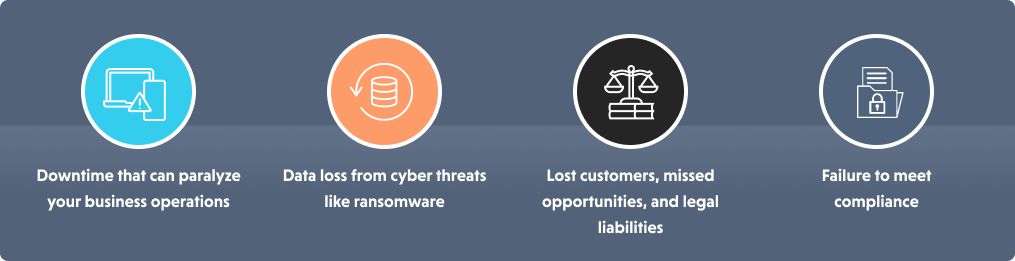
In a world where disruption translates into financial loss and reputational damage, having a solid DR is absolutely critical. Without it, your business risks:

  • Downtime that can paralyze your business operations
  • Data loss from cyber threats like ransomware
  • Lost customers, missed opportunities, and legal liabilities
  • Failure to meet compliance

So how do companies and their IT prepare for the unexpected? It starts with a well-structured approach that ensures your business operations can bounce back quickly from a disruption. 
dyn - 8 Steps for Creating a Disaster Plan - banner

Step 1: Understand what’s at stake

Before you can protect your business, you need to identify what’s critical. That’s where a Business Impact Analysis (BIA) comes in, which answers questions like: What are the most essential systems and processes? What would happen if they went down for an hour? A day? Longer?

Defining your Recovery Time Objective (RTO, which is how quickly systems need to be restored), and Recovery Point Objective (RPO), the maximum acceptable data loss, will shape your entire recovery strategy. For example, a hospital can’t afford to lose access to patient records, while an e-commerce site risks massive revenue loss if checkout systems go offline.

Step 2: Identify the biggest threats

Not all disasters look the same. Some are cyberattacks, some are human errors, and others are unavoidable natural events. A risk assessment helps pinpoint the most likely threats and their potential impact.

By evaluating vulnerabilities—such as outdated software, lack of backups, or reliance on a single data center—you can prioritize what needs the most protection.

Step 3: Choose the right recovery strategy

Now that you know what’s at stake, it’s time to map out a recovery game plan. This includes:

  • Deciding where backups live, whether that’s on-premises, in the cloud, or a hybrid mix.
  • Establishing failover systems, such as a secondary data center, a cloud-based backup, or a third-party Disaster Recovery as a Service (DRaaS) solution.
  • Ensuring real-time data replication for mission-critical applications.

The goal of all this? If disaster strikes, your business can switch to a backup system with minimal downtime.

Step 4: Plan for communication and coordination

A recovery plan is only useful if the right people know what to do and when. Who’s responsible for initiating recovery procedures? Who communicates with employees, customers, and vendors?

A clear communication plan ensures that in an emergency, there’s no scrambling to figure out next steps. This includes defining roles and responsibilities, setting up emergency contacts, and outlining internal and external communication protocols.

Step 5: Document everything

Every good plan needs a playbook. Your DR should include:

  • Step-by-step recovery procedures.
  • Backup locations and access instructions.
  • Key personnel and their responsibilities.
  • Contact information for vendors and service providers.

Also, everything you document shouldn’t be buried in an email inbox or lost in a filing cabinet—store it in multiple secure locations, both physically and digitally.

6. Test, test, and test again

A disaster recovery plan isn’t a “set it and forget it” document. It has to be tested to make sure it actually works.

This means having your IT run tabletop exercises (where teams talk through their response in a simulated scenario) as well as full recovery drills to ensure systems can be restored within your defined RTO and RPO. Each test helps uncover weaknesses, allowing you to fine-tune the plan before a real crisis hits.

7. Train your team

Technology is only part of the equation. Your employees and IT staff need regular training to stay prepared. This includes:

  • Educating teams on DR procedures.
  • Running simulated disaster scenarios.
  • Reinforcing cybersecurity best practices (like avoiding phishing emails that could trigger a ransomware attack).

8. Keep things up to date

Your business evolves, and so should your disaster recovery plan. Every time there’s a change—whether it’s new software, cloud migrations, or compliance regulations—your DR strategy needs a review.

Regular monitoring and updates ensure that when an actual disaster happens, you’re not relying on an outdated plan that no longer fits your infrastructure.

Always be prepared

It’s an unfortunate fact that a disaster can strike your business at any moment. 

Whether that disaster is big or small doesn’t matter. You need a well-structured disaster recovery plan to safeguard your business, ensure minimal downtime, and keep your data safe.

By proactively assessing risks, defining recovery objectives, and implementing the right solutions, your business can navigate disasters with confidence. The goal isn’t to predict a major disruption, but to know that one will eventually happen.
dyn - 8 Steps for Creating a Disaster Plan - cta


Kevin is the Founder and CEO of Dynamic Computing. He’s both a visionary leader and an expert hands on practitioner with years of experience in all things IT.