








































IT Strategic Planning
A clear roadmap for the technology your business needs—now and as you grow.
IT Strategic Planning Basics
Without a clear technology strategy, businesses may face inconsistent upgrades, unexpected costs, operational inefficiencies, and increased security risks. IT strategic planning helps organizations align technology decisions with business goals while creating a roadmap for future growth and stability.
Effective IT strategic planning involves evaluating current infrastructure, identifying operational challenges, forecasting future technology needs, and prioritizing investments that support business objectives. This may include infrastructure modernization, cybersecurity planning, cloud adoption, software lifecycle management, budgeting, and long-term scalability considerations.
As technology environments continue to evolve, many organizations need experienced guidance to make informed decisions and develop strategies that support both current operations and future business demands.
At Dynamic Computing, we help businesses develop IT strategic plans designed to improve operational efficiency, strengthen security, and support long-term organizational growth through practical and scalable technology solutions.
Why IT Strategic Planning Matters
Your IT drives your business forward. Without IT strategic planning, you risk missing out on opportunities, reduced productivity, and not achieving your goals.

Overspending on IT

Not Having the Right IT
Investing without a plan can leave you scrambling unnecessarily when technology needs arrive.

Missed Opportunities
Not having a plan in place leads to missed opportunities for your business.

Unwelcome Surprises
A Deeper Look at IT Strategic Planning
Businesses today rely on technology to support nearly every aspect of daily operations, making long-term planning essential for maintaining efficiency, security, and competitiveness. Without a proactive technology strategy, organizations often face reactive purchasing decisions, aging infrastructure, operational disruptions, and difficulty adapting to evolving business needs.
IT strategic planning provides organizations with a structured approach to evaluating technology environments and preparing for future growth. Planning may include infrastructure assessments, cybersecurity evaluations, cloud strategy development, hardware lifecycle planning, disaster recovery considerations, software standardization, and budgeting for future technology investments.
One common misconception is that IT strategic planning is only necessary for large enterprises with complex infrastructure. In reality, businesses of all sizes benefit from having a clear technology roadmap that supports operational goals and reduces uncertainty around future IT decisions.
A well-developed IT strategy can help businesses improve productivity, strengthen cybersecurity, reduce unnecessary costs, and make technology investments more predictable and effective. Organizations that plan proactively are often better positioned to scale efficiently and adapt as operational and technology requirements change.
At Dynamic Computing, we work closely with organizations to develop IT strategic plans tailored to their operational priorities, infrastructure needs, and long-term business goals. Our goal is to help businesses build reliable, scalable technology environments that support sustained operational success.
What's Included in IT Strategic Planning Services?
Our IT strategic planning services are designed to ensure you always have a sound plan in place for your IT. We can provide you with:
-
A detailed roadmap for future IT investments
-
Guidance on the right technologies to meet your goals
-
Regular updates to your IT strategy as your needs change
-
A schedule for sunsetting or replacing IT
From Our Blog
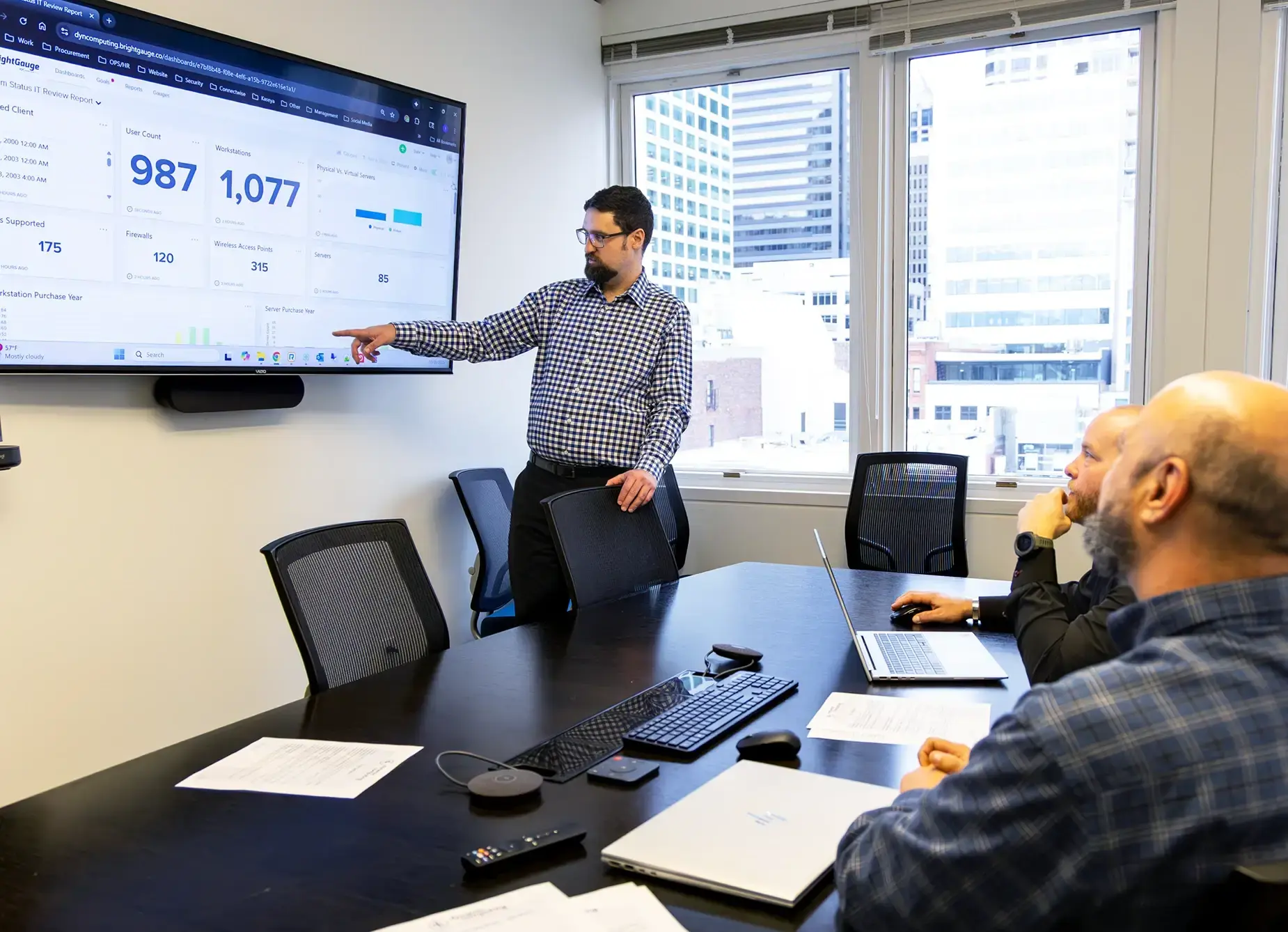
Upgrading Your IT Has Never Been More Critical to Success
IT has changed dramatically in the last two decades, to say the least. We’ve seen more technological evolution in the last 18 months than we have in the last 18 years combined.
Business models have been completely reinvented for the modern digital age, and new tools have come to the forefront to serve as compasses in an industry that is continuously evolving.
Your operations depend on an integrated web of complex IT infrastructure, which makes keeping your systems up to date more critical than ever. IT upgrade services ensure your employees and teams remain optimally productive and strategic business objectives stay on track. When it comes to your IT, you simply can’t afford to fall behind today.
The Consequences for Not Upgrading Your Systems Can Be Catastrophic
More than ever, we’re dependent on connectivity and operations through technology, making a great IT system a make-or-break element for business success. The repercussions of an out-of-date IT system can’t be trivialized.
At best, your systems will be inefficient. Your business will take longer to do the same amount of work, leading to less progress and development toward your objectives. At worst, your system will be plagued by crashes, extended downtime, and crippling security breaches that could dismantle your company overnight.
We Do IT Differently
A partner rather than a provider, we’re an extension of your team, delivering a personalized IT experience you won’t get elsewhere.

Predictable Pricing
Concierge-Level Service
A dedicated primary technician delivers white-glove service at every touch point.
Only Experts
Start Smart
Compliance Experts
100% Local
Committed to Communication
Personalized Support

More About IT Consulting Services
The Benefits of an Audit-First Approach
Too often companies find themselves trapped in a cycle of reactive decisions when it comes to their IT infrastructure...
Basic IT Budgeting for Your Business
Investing in IT is about much more than hardware and software. The dollars you allocate will fuel your growth...
Comparing IT Support Solutions
In general, there are four types of IT solutions available to businesses with 200 or fewer employees....
Get IT Right This Time

FAQs
An IT strategy is essential because it ensures that your technology investments are aligned with your business goals. Without a clear plan, businesses risk wasting resources on unnecessary tools, exposing themselves to cybersecurity threats, and missing opportunities for growth and efficiency. A well-crafted IT strategy can:
• Improve operational efficiency.
• Enhance cybersecurity.
• Reduce downtime and IT-related issues.
• Support scalability as your business grows.
• Ensure compliance with industry regulations.
An effective IT strategy typically includes the following components:
Assessment of Current IT Infrastructure: An evaluation of your existing systems, networks, and tools.
Business Goals Alignment: Identifying how IT can support your short- and long-term objectives.
Technology Roadmap: A detailed plan for implementing or upgrading hardware, software, and systems.
Cybersecurity Plan: Policies and tools to protect your data and systems from threats.
Budgeting and Resource Allocation: A clear breakdown of costs and resources needed.
Vendor Management: Guidance on selecting and managing third-party IT vendors.
Metrics and KPIs: Key performance indicators to measure the success of your IT initiatives.
The timeline for an IT strategy can vary depending on the size and complexity of the business. Generally, IT strategies are planned over a period of 1 to 5 years and reviewed annually to ensure they remain aligned with evolving business needs. A typical timeline might include:
Initial Assessment (1-3 months): Conduct a thorough review of your current IT systems and identify gaps.
Strategy Development (1-2 months): Define goals, create a roadmap, and finalize the strategy.
Implementation (6-12 months): Roll out new systems, tools, and processes.
Ongoing Maintenance and Review (Continuous): Regularly monitor and adjust the strategy as needed.
The effectiveness of an IT strategy depends on the unique needs of your business. However, some common strategies for small and mid-sized businesses include:
Cloud-First Strategy: Prioritize cloud-based solutions to enhance scalability, reduce costs, and improve accessibility.
Cybersecurity-Focused Strategy: Emphasize robust security measures to protect sensitive data and comply with regulations.
Cost-Optimization Strategy: Focus on maximizing the value of IT investments by reducing unnecessary expenses.
Digital Transformation Strategy: Leverage emerging technologies such as AI, IoT, and automation to drive innovation and efficiency.
Hybrid IT Strategy: Combine on-premises infrastructure with cloud solutions for flexibility and control.